
HECOR Office Acoustic Pods: How to Create a Quiet, Productive Workspace
Open-plan offices need flexible places for calls, focused work and private conversations. Office pods and acoustic pods provide that space by combining sound-reducing construction, interior sound absorption, fresh-air ventilation, lighting and integrated power in a compact enclosure. The right pod is not simply a box that looks quiet: it must be comfortable to use, sized for the conversation and carefully positioned in the workplace.
For businesses comparing an acoustic office pod, soundproof phone booth or meeting pod, the most useful questions are practical. How much speech privacy is needed? Will one person or several people use it? Is the ventilation quiet enough for video calls? Can the pod fit through the building and be relocated later? This guide explains the key features to review and shows how the HECOR office pod range can support different workplace requirements.
What Are Office Pods and Acoustic Pods?
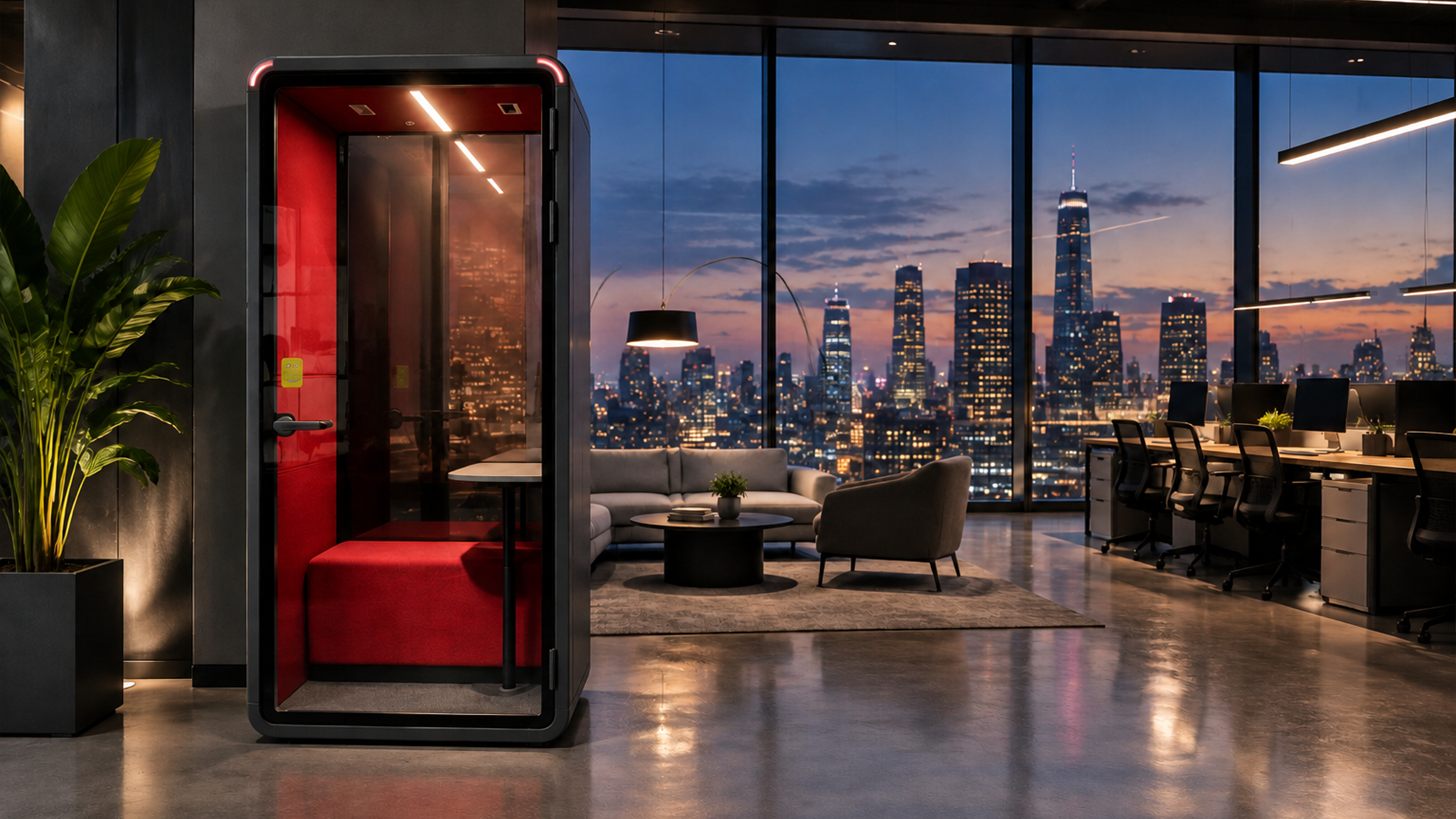
HECOR office pod china is a freestanding, enclosed workspace placed inside an existing office. It can create a private setting for phone calls, video meetings, concentrated work or small-group collaboration without the construction time of a traditional room HECOR acoustic pod adds a stronger focus on controlling speech transmission and reducing distracting reflections inside the enclosure.
These terms are sometimes used interchangeably with office phone booth, soundproof booth, privacy pod and meeting pod. However, buyers should look beyond the label. Acoustic performance depends on the complete assembly: the frame, wall panels, glazing, door, seals, ventilation routes and interior finishes. A thick wall cannot compensate for a poorly sealed door or a noisy fan.
The goal is also not to eliminate every sound in the building. In a real workplace, a well-designed pod should reduce the impact of surrounding conversations and make speech inside less intelligible outside, while creating a calmer environment for the occupant. HECOR office pods china is designed around this complete workplace experience, with options ranging from one-person soundproof booth to larger meeting pods.
How Acoustic Office Pods Control Sound
Effective sound control uses two complementary methods: sound insulation and sound absorption. Insulation helps limit the amount of sound passing through the pod structure. Absorption reduces reflections inside the pod, which can otherwise create an echoing or “boxy” sound during calls. Both matter for speech privacy and clear communication.
A office pod should therefore be assessed as a system rather than by one material or one advertised number. Pay attention to the continuity of the wall construction, the quality of the door seals and the way glass is integrated into the frame. Gaps around a door or untreated hard surfaces can reduce the benefit of an otherwise robust enclosure.
HECOR states that its office acoustic pods provide a speech level reduction of more than 29 dB under ISO 23351-1:2021. This type of speech-focused measurement is more relevant to phone booths and meeting pods than a generic claim about “soundproofing.” For background on the standardisation work related to furniture ensembles and enclosures, see the BSI building acoustics committee. For additional workplace privacy ideas, this open-plan office privacy guide provides a useful design reference. Buyers should still request the relevant test documentation for the exact model being specified.
Inside the pod, upholstered or fabric-covered surfaces, acoustic panels and soft furnishings can help limit reflections. The result should be tested with a real laptop call rather than judged only by appearance. Listen both inside and outside while someone speaks at a normal volume.
Ventilation and Lighting Make Pods Usable
Acoustic performance is only useful when people want to stay in the pod. A fully enclosed booth needs continuous air exchange, but every ventilation opening can also become a path for sound. A practical acoustic pod should balance fresh air, fan noise and airflow so the occupant can work comfortably without hearing a distracting mechanical hum.
HECOR lists a ventilation volume of up to 459 m³/h for its office phone booth solution. The required airflow will depend on the model, occupancy and local installation conditions, so facility teams should confirm the specification for the selected pod and the expected number of users. For a multi-person meeting pod, ventilation and heat management deserve particular attention because several people may be speaking for a longer period.
Lighting has an equally direct effect on the user experience. Even, adjustable illumination can make video calls look more professional and reduce eye strain during focused work. HECOR’s environment control switch allows users to adjust ventilation speed, light strength and light temperature. That gives employees more control over the space instead of forcing every user to work with the same setting.
A useful pre-purchase check is simple: sit inside the pod, start a video call, speak for several minutes and test the light from the camera’s point of view. Check for fan noise, shadows, glare on the glass and enough brightness on the face and work surface.
Ventilation and Lighting Make Pods Usable
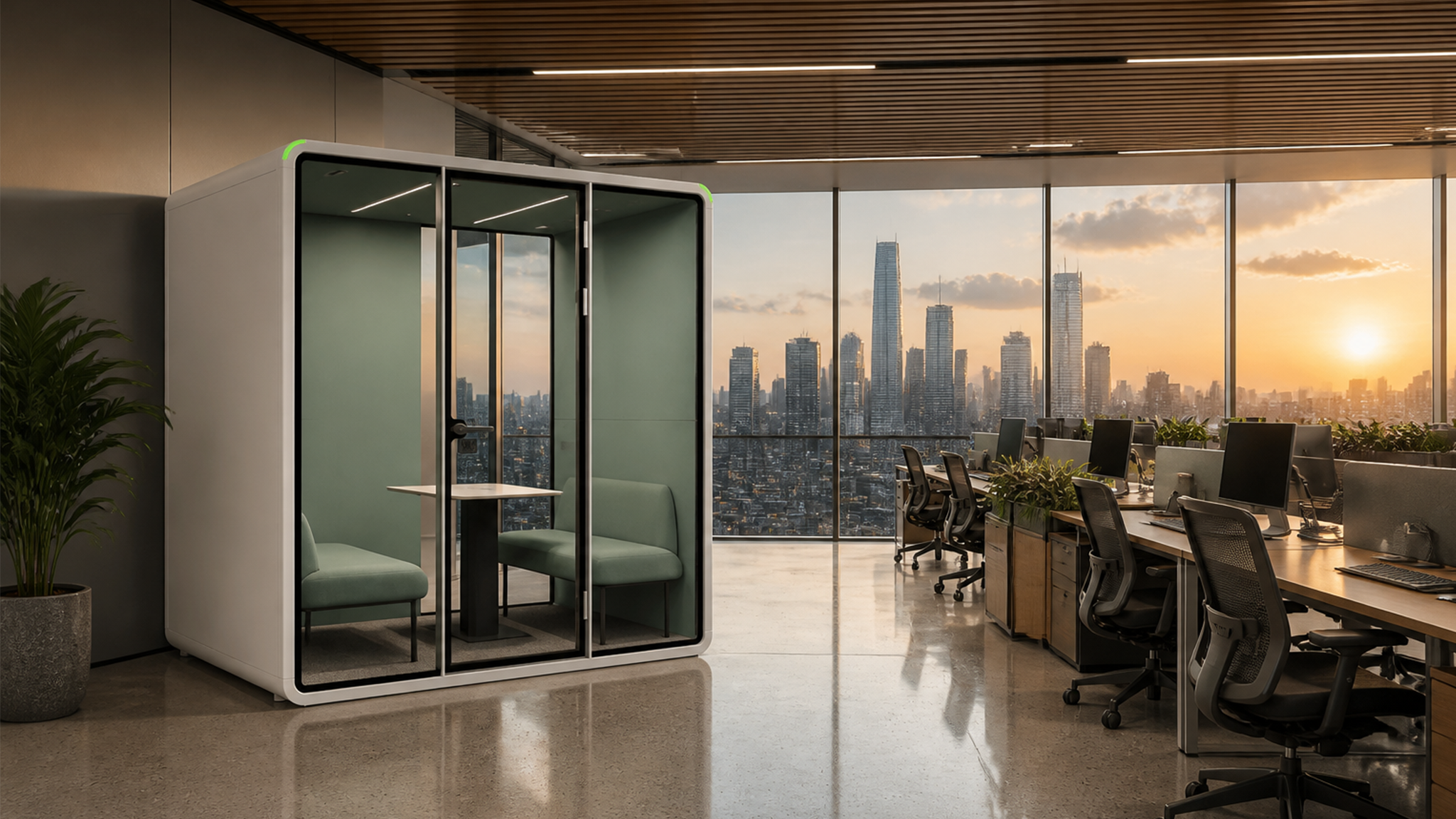
The best office pod is sized for the activity, not only for the available floor area. A compact single-person booth is efficient for private calls, interviews, online meetings and concentrated tasks. A larger enclosure is more suitable when employees need to collaborate, share a screen or hold a confidential discussion with colleagues.
| Office Pod Model | Published capacity | Typical workplace use |
|---|---|---|
| Model S Office Pod | One person | Phone calls, video meetings and focused work |
| Model M Office Pod | One person | Longer individual work sessions and private conversations |
| Model SL Office Pod | Two people | One-to-one meetings and collaborative calls |
| Model L Meeting Booth | Four people | Small meetings and confidential discussions |
| Model XL Meeting Booth | Six people | Team meetings and shared video conferences |
Capacity should be treated as a starting point, not the only decision factor. Consider table depth, chair movement, camera position, ventilation, door clearance and how long users will occupy the pod. If a one-person booth becomes the default room for two-person meetings, employees may avoid it even if its acoustic performance is strong.
Workplace Placement and Installation Checklist
Placement can influence the perceived quality of an acoustic pod as much as its construction. Avoid putting the entrance directly beside a coffee machine, printer queue or busy corridor. These areas create visual movement and intermittent noise that can interrupt calls even when the pod reduces airborne sound.
Before delivery, check the route from the loading point to the final position. Measure doors, lifts, corridors, turning areas and ceiling height. Confirm the location of electrical connections and leave sufficient clearance for door operation, cleaning and ventilation. A movable design can be valuable when an office layout changes, but the pod must still be installed on a stable, suitable surface.
HECOR highlights an aluminum frame, movable design, occupancy light and integrated controls as part of its office pod solution. An occupancy indicator helps colleagues understand when a pod is in use, while wheels can support future space planning where the building conditions permit relocation. The final installation should also maintain clear access routes and comply with the building’s fire, electrical and accessibility requirements.
For a broader workplace privacy strategy, acoustic pods can work alongside acoustic wall treatments, zoning and clear room-booking rules. A pod is most effective when it is connected to an everyday workflow rather than treated as a decorative piece of furniture.
Why HECOR Office Pods Are Worth Comparing
HECOR positions its office pods as ready-to-install acoustic spaces for meetings, private calls and focused work. The product page states that the range includes GREENGUARD Gold certification, CE certification and speech level reduction above 29 dB under ISO 23351-1:2021. These claims should be reviewed against the documentation for the specific configuration, especially when a project has formal procurement, safety or environmental requirements.
The range also gives planners a way to standardise different privacy needs within one office. A Model S or Model M can support individual calls, while Model SL, Model L and Model XL can provide progressively larger meeting environments. This makes it easier to match capacity to demand instead of asking every department to share one oversized meeting room.
When comparing suppliers, request model-specific dimensions, internal clearances, acoustic test information, ventilation data, electrical requirements, lead time, installation scope and warranty terms. Ask for a demonstration or sample call whenever possible. The most reliable choice is the pod that performs well acoustically and remains comfortable, accessible and easy to use every day.
To discuss a project, review the HECOR contact page and share the required capacity, office layout, destination country and intended use. HECOR Office Pods China can then recommend a suitable office pod or acoustic meeting pod configuration.
How do I choose the right HECOR model?
Start with the number of people who will use the pod at the same time, then check internal dimensions, table and seating requirements, installation access, ventilation and the type of work being performed.
Use HECOR office pods products and request model-specific details before ordering.
We're Happy To Hear From You
Get in touch for product details, pricing or personalized solutions that meet your unique needs.