
Best Office Pods for Modern Workplaces: A Practical Buying Guide
The best office pods are not always the largest or most expensive models. They are the pods that match the way employees make calls, focus, collaborate and use the office every day. A compact phone booth may be ideal for a sales team, while a two-person pod can support interviews and a four-person acoustic meeting pod can protect conference-room capacity.
Office pods are becoming an important part of workplace planning because they add private space without the disruption of building permanent rooms. This guide explains how to compare office pods, acoustic pods, soundproof office pods and meeting pods by use case, technical performance and long-term flexibility.
Which Type of Office Pod Does Your Team Need?
Start with the work activity rather than the product name. A phone booth pod is designed primarily for one person taking calls or joining video meetings. A focus pod is intended for concentrated individual work. Two-person pods support interviews, coaching and private conversations, while larger meeting pods create a controlled environment for collaboration.
This use-case approach prevents a common purchasing mistake: selecting a visually attractive pod that does not match demand. If employees frequently make individual calls, several single-person booths may be more useful than one large meeting cabin. If the office hosts regular hybrid workshops, a four- or six-person meeting pod may deliver more value.
HECOR office pod includes models for one person through six people. The range can therefore be used as a starting point for creating a mixed workplace setting instead of relying on one type of enclosure for every task.
Acoustic Performance and Speech Privacy
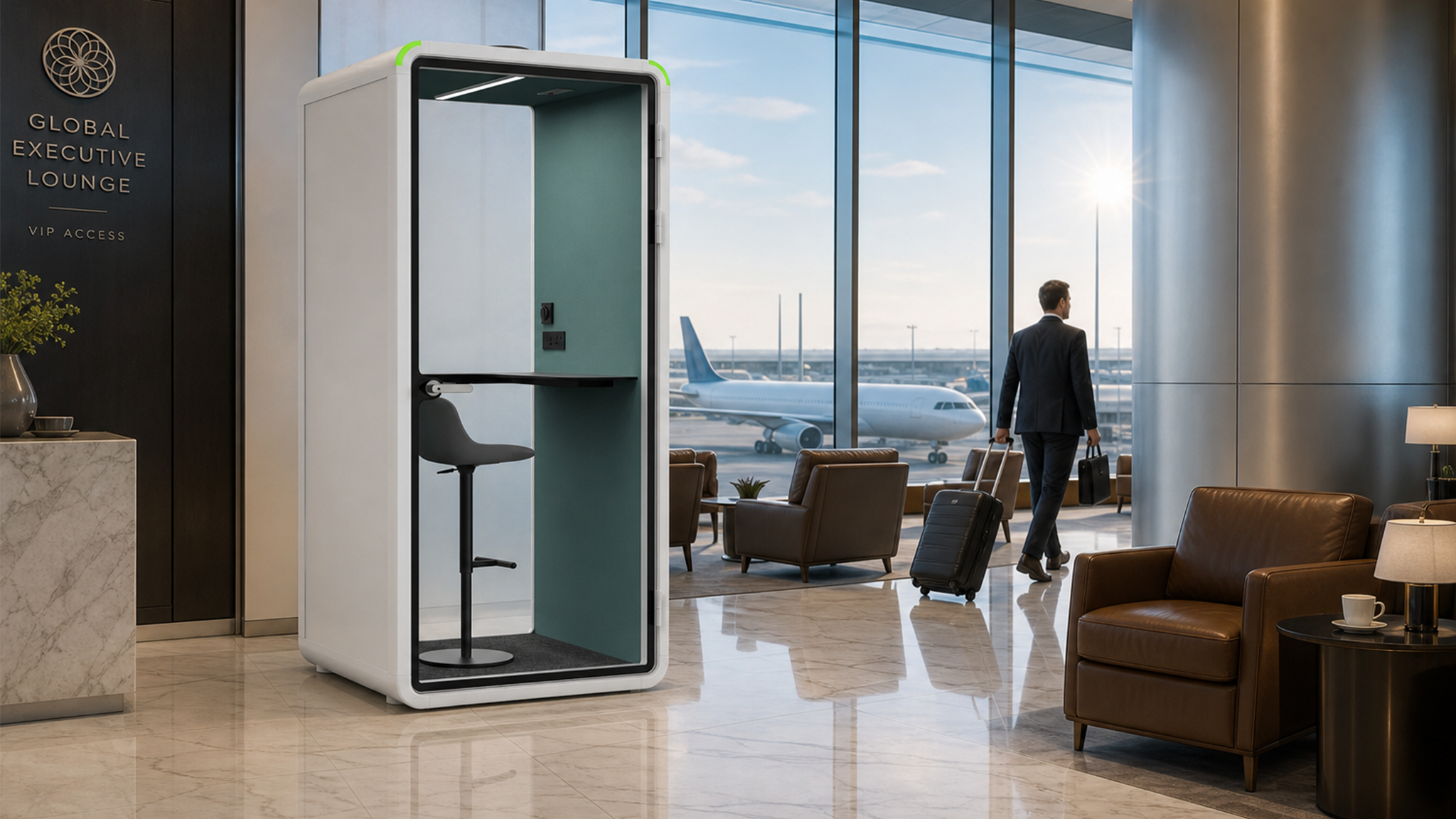
The most important feature of an acoustic office pod is how it manages speech. Good performance has two sides: reducing the amount of sound that travels through the enclosure and controlling reflections inside it. The first supports privacy for people outside the pod; the second helps occupants hear and speak clearly during calls.
Buyers should look at the complete construction, including wall panels, glass, door seals, joints and ventilation routes. A weak door seal or noisy fan can reduce the practical value of an otherwise well-built booth. Ask suppliers how acoustic performance is tested and request data for the exact model being considered.
HECOR states that its office pods provide speech level reduction of more than 29 dB under ISO 23351-1/2021. This speech-focused measurement is more useful for office phone booths and meeting pods than a general claim that a product is simply “soundproof.” For technical background on furniture ensembles and enclosures, see the BSI building acoustics committee.
Whenever possible, test a real conversation. Place one person inside and another outside, then make a video call to check speech clarity, echo and fan noise. A live demonstration often reveals more than a product photograph.
Ventilation, Lighting and Everyday Comfort
An office pod will only be successful if employees want to use it. Ventilation is essential in an enclosed space, especially when a pod is occupied for a long meeting. The system should provide suitable airflow without creating a mechanical sound that competes with speech.
HECOR lists a ventilation volume of 459 m³/h for its office phone booth solution. The correct requirement depends on the model, occupancy and building conditions, so a project team should confirm the figure for the selected configuration. Larger meeting pods may need a different airflow profile from a one-person booth.
Lighting also affects productivity and video quality. Adjustable light strength and colour temperature can make a face easier to see on camera and reduce glare on screens. HECOR describes an environment control switch that allows users to adjust ventilation speed, light strength and light temperature. During a product test, check the brightness, camera image, screen reflection, seating comfort and availability of power.
HECOR Office Pod Models by Use Case
The following HECOR models provide a simple way to match capacity with typical workplace activities:
| Model | Published capacity | Suitable use |
|---|---|---|
| Model S | One person | Private calls and focused work |
| ARC Home Pod | One person | Individual privacy and remote work |
| Model M | One person | Longer work sessions and confidential calls |
| Model SL | Two people | Interviews and one-to-one meetings |
| Model L | Four people | Small team meetings |
| Model XL | Six people | Hybrid meetings and collaboration |
Capacity is only the starting point. Check internal dimensions, table depth, screen placement, chair movement and expected meeting duration. A one-person pod should not become the default room for two people, and a large meeting pod should not be used for every short call.
Installation, Placement and Flexibility
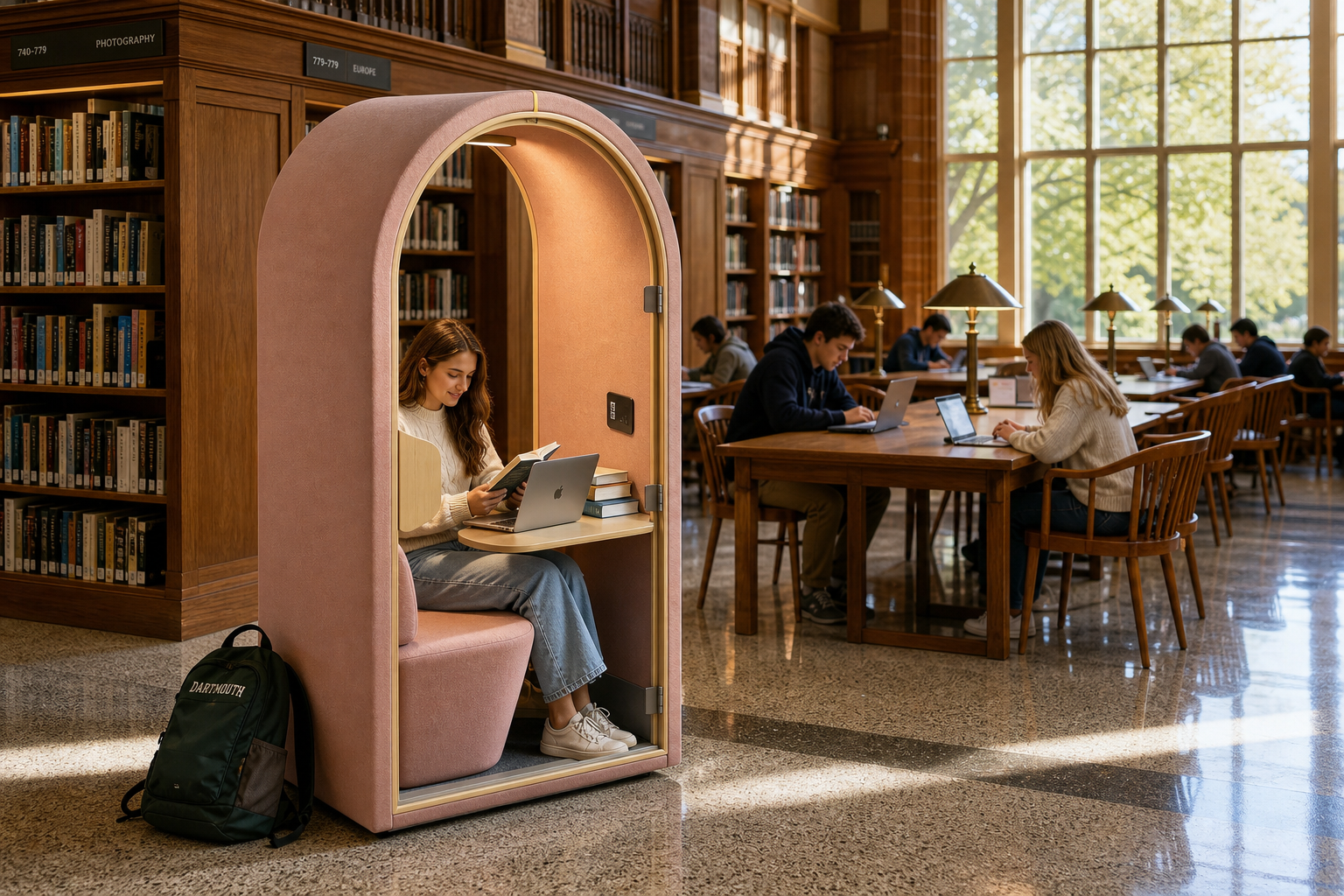
The best office pod can perform poorly if it is placed beside a printer, coffee machine or busy corridor. Visual movement can be distracting even when sound transmission is reduced. Position phone booths near the teams that use them, but avoid blocking circulation or placing every quiet space in the noisiest part of the office.
Before delivery, measure lift doors, corridors, turning areas, ceiling height and the final installation zone. Confirm electrical requirements, cleaning access and ventilation clearance. HECOR highlights an aluminum frame, movable design and occupancy light as part of its office pod solution. Confirm the exact configuration and moving requirements before assuming that relocation will be simple.
A modular pod can also support future workplace changes. If the office expands, changes departments or moves to a new lease, a suitable pod may be easier to adapt than a permanent drywall room. This flexibility should be included in the buying decision alongside the initial purchase cost.
Office Pod Buyer Checklist
Before choosing a supplier, ask:
- What speech-level reduction is reported for the exact model?
- How are doors, glass and ventilation openings treated acoustically?
- Is the fan quiet enough for video meetings?
- Does the pod include lighting, power and user controls?
- How many people can use it comfortably for the intended duration?
- What are the delivery route, installation and electrical requirements?
- Can the pod be moved or reconfigured later?
- Which certificates and warranty documents apply to the quoted model?
HECOR’s official information references CE certification, UL 962 compliance and GREENGUARD Gold certification. Request the current documentation during procurement and confirm that it applies to the selected configuration. To request technical details or a quotation, visit the HECOR contact page.
A useful procurement process also includes a site walk-through, a delivery-route check and a short user trial. Invite representatives from facilities, IT and the main user groups to test the pod together. This can reveal practical issues such as insufficient screen space, awkward cable routing or a location that is too close to a noisy circulation path. Document the answers before comparing final quotations so every supplier is assessed against the same requirements.
Conclusion
The best office pods combine speech privacy, quiet ventilation, practical lighting, comfortable dimensions and installation flexibility. A successful office pod strategy usually includes different sizes for different tasks: phone booths for calls, two-person pods for private conversations and larger meeting pods for hybrid collaboration.
By auditing workplace demand first and comparing acoustic data, comfort, capacity and long-term flexibility, businesses can choose pods that employees will actually use. HECOR’s range provides a practical starting point for offices that need private space without committing to a major permanent renovation. The strongest result comes from treating pods as part of a wider workplace plan, with clear placement, user guidance and regular review of occupancy.
That approach helps the investment support privacy, productivity and future office changes instead of becoming unused furniture. It also gives facilities teams a clear basis for evaluating whether the chosen mix still meets demand as the organisation grows.
🌐 https://hecor-pods.com/index.php/products/
📧 sales03@hecor-pods.com